
Renting a Car in Nova Scotia: The 2026 Guide
Last checked Oct 30, 2026. Rules, fees and tolls in this guide come from the Government of Nova Scotia, the Confederation Bridge and Cobequid Pass operators, and the rental companies’ own policy pages, all checked Oct 30, 2026. Rental fees change often, so confirm them when you book.
Heads up: some links in this guide are affiliate links. If you book through them, Moonlight Travel may earn a small commission at no extra cost to you. It helps keep our guides free. Read our affiliate disclosure.
Renting a car in Nova Scotia is the easiest way to see the province, from Peggy’s Cove and Lunenburg to the Cabot Trail. This guide covers what drives the price, where you can rent outside Halifax, the age, licence and payment rules, insurance for Canadians, taking the car to PEI or New Brunswick, and the driving rules worth knowing. If you already know your dates, compare Nova Scotia rental cars here.

In this guide
- Do you need a car in Nova Scotia?
- How much does it cost to rent a car in Nova Scotia?
- Where to rent: Halifax airport, downtown, Sydney, Yarmouth
- Age, licence and payment rules
- Insurance for Canadians: CDW and credit cards
- One-way rentals and taking the car to PEI or New Brunswick
- Driving in Nova Scotia: rules and tips
- Driving distances from Halifax
- FAQ
Do you need a car in Nova Scotia?
Can you see Nova Scotia without a car? Halifax itself is walkable, and you can get from the airport to the city by bus or shuttle (see our Halifax airport to downtown guide). Peggy’s Cove also has guided tours, covered in our Peggy’s Cove tours from Halifax guide.
Beyond that, a car makes a big difference. The coastal villages, wineries, beaches and national parks are spread out, and public transport between them is limited. If you’re planning a Nova Scotia road trip, the Cabot Trail or a few weekend getaways from Halifax, you will want your own wheels.
How much does it cost to rent a car in Nova Scotia?
There is no single fixed price. What you pay depends on when you travel, how far ahead you book, the car class and where you pick it up. Summer and early fall are the busiest months, so prices are usually higher and cars sell out closer to the date. Our best time to visit Nova Scotia guide explains the seasons. We don’t quote “average” daily rates, because they change daily and we can’t verify them.
These are the add-on costs we could confirm on the companies’ own pages on Oct 30, 2026:
- Young renter fee: $20 a day for drivers aged 21 to 24 at Enterprise’s downtown Halifax branch; $25 CAD a day at Avis in Canada, per its Canadian terms.
- Damage waiver: Enterprise’s downtown Halifax branch lists its optional damage waiver at $32.99 to $39.99 CAD a day.
- Additional drivers: Enterprise charges $10 a day for each additional driver, but a spouse or domestic partner who meets the requirements drives at no extra charge.
- Deposit: Enterprise downtown Halifax holds a $300 deposit for most cars. Avis corporate locations put a hold of the estimated charges plus 20 percent, or a minimum of $750 CAD, whichever is greater.
- Tolls: the Confederation Bridge to PEI and, for cars not registered in Nova Scotia, the Cobequid Pass. See below.
The best way to find today’s price is to compare several companies at once for your exact dates. Check current Nova Scotia rental prices.
Where to rent: Halifax airport, downtown, Sydney, Yarmouth
Halifax Stanfield airport
Most visitors fly into Halifax Stanfield (YHZ), and the airport has the largest choice of companies and the longest opening hours. We cover the airport desks, shuttles and pickup tips in our Halifax airport car rental guide.
Downtown Halifax
Renting a car in Halifax itself works well if you want a day or two in the city first and don’t need a car (or parking) until you leave town. City branches often have shorter hours. For example, Enterprise Downtown Halifax Scotia Square at 2000 Barrington St listed hours of 8 AM to 5 PM on weekdays and 9 AM to 2 PM on weekends, with no after-hours returns, when we checked.
Sydney (Cape Breton)
Flying into Sydney puts you close to the Cabot Trail. Sydney airport (YQY) lists rental counters for Avis/Budget and Enterprise/National, and Avis lists its own Sydney Airport location.
Yarmouth
Yarmouth is handy if you arrive on the ferry from Maine or want to explore the South Shore and Acadian Shore. Enterprise lists a Yarmouth branch. Check the hours and the one-way fee if you plan to return the car in Halifax.
Wherever you start, compare companies at your pickup location to see who has cars for your dates.

Age, licence and payment rules
Age
The age to rent a car in Nova Scotia is 21 at the big brands. Enterprise says you must be at least 21 to rent in Nova Scotia, and drivers aged 21 to 24 pay a daily underage surcharge and are limited to economy through full-size cars, minivans, pickups and SUVs seating up to 5. Avis also rents to 21 to 24 year olds with a valid credit card and licence, but not luxury cars, minivans, specialty cars or larger SUVs. Avis also says additional drivers must be at least 25.
Licence
Visitors can drive in Nova Scotia for up to 180 days on a valid licence from another province or country, as long as they are at least 16, the Government of Nova Scotia says. Rental companies have their own rules on top: Enterprise requires a valid, unexpired, government-issued photo licence for the whole rental, and says digital licences and photocopies aren’t accepted.
Payment: credit card or debit card?
A credit card in the renter’s name is the simplest option. Debit is harder. Enterprise’s downtown Halifax branch accepts debit cards only if your licence address matches your home address, you live within 50 km or hold a Nova Scotia licence, and you bring two recent proofs of address. Its Halifax airport branch doesn’t accept Canadian debit cards. Avis says debit cards aren’t accepted as credit identification when you pick up the car. For workarounds, read our guide to renting a car without a credit card in Canada.
Insurance for Canadians: CDW and credit cards
Canadian rental rates usually include the legal minimum liability coverage. Avis says public liability and property damage are included in its rates. The main extra on offer is a collision or loss damage waiver (CDW, LDW or DW), which reduces what you pay if the car is damaged or stolen. Enterprise points out that its DW is not insurance and may duplicate cover you already have.
Before you pay for a waiver, check two things:
- Your own car insurance. Many Canadian auto policies extend some cover to rental cars. Ask your insurer what applies and for how long.
- Your credit card. Some Canadian credit cards include rental car collision cover when you decline the company’s waiver and pay with that card. The rules vary by card, including car types and the maximum rental length, so read your card’s certificate of insurance before you travel.
A third option is a full coverage add-on from a booking site, which you pay for upfront and claim back if something happens. See full coverage options when you compare cars. Driving on to the US? Car cover doesn’t pay medical bills, so read our travel insurance for Canadians visiting the US guide.
One-way rentals and taking the car to PEI or New Brunswick
Taking a Nova Scotia rental car to PEI or New Brunswick is usually allowed. Enterprise’s Halifax branch says cars rented in Canada can be driven throughout Canada and the US, but not into Mexico. Avis allows Canadian rentals into the US (not Alaska or Mexico), with one catch for this region: on cars rented in NS, NB, PEI or Newfoundland, unlimited kilometres apply only while you stay within those provinces. Outside them, a kilometre allowance and an extra fee apply.
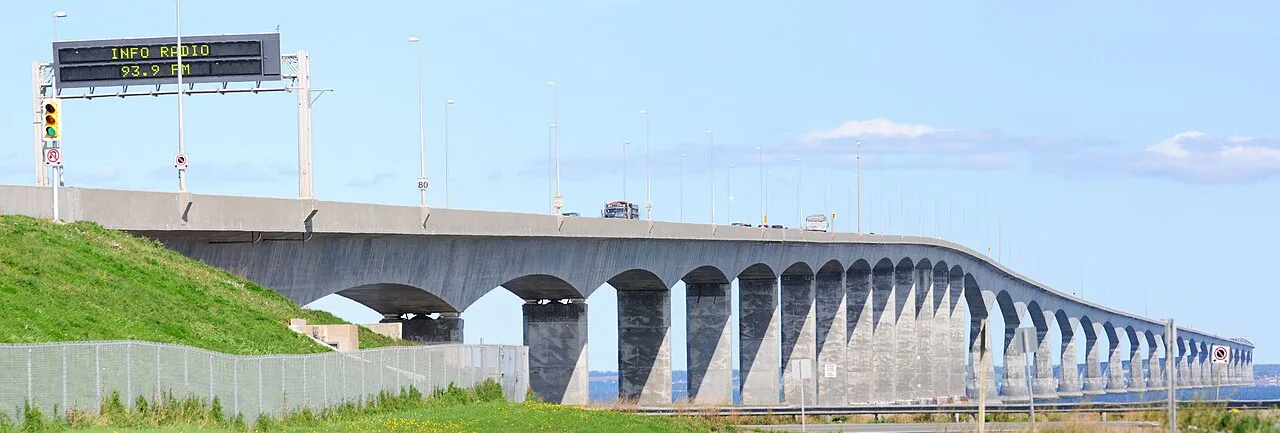
The Confederation Bridge to PEI charges $20.00 for a car with 2 axles (the same for a motorcycle) when we checked. The toll covers the round trip and is collected only when you leave PEI at Borden-Carleton. Cash, Interac and major credit cards are accepted. Our PEI road trip itinerary has route ideas.
One-way rentals, such as picking up in Halifax and dropping off in Sydney, Yarmouth or another province, usually cost extra. Check the total before you book.
Driving in Nova Scotia: rules and tips
Is driving in Nova Scotia easy? For most Canadians, yes. These driving rules come from the Nova Scotia Driver’s Handbook:
- Speed: unless a sign says otherwise, the maximum speed on any highway is 80 km/h, and 50 km/h in business and residential districts. Many 100-series highways are posted higher, so watch the signs.
- Right on red: allowed after a full stop unless a sign says “no turn on red”. Left on red is only allowed from a one-way street onto another one-way street.
- Slow down, move over: when an emergency vehicle is stopped with its lights flashing, slow to 60 km/h, or the posted limit if it’s lower.
- School zones: 30 km/h where the approaching limit is 50 km/h, or 50 km/h where it is higher.
- Headlights: required from half an hour after sunset to half an hour before sunrise, and any time fog, rain or snow limits visibility.
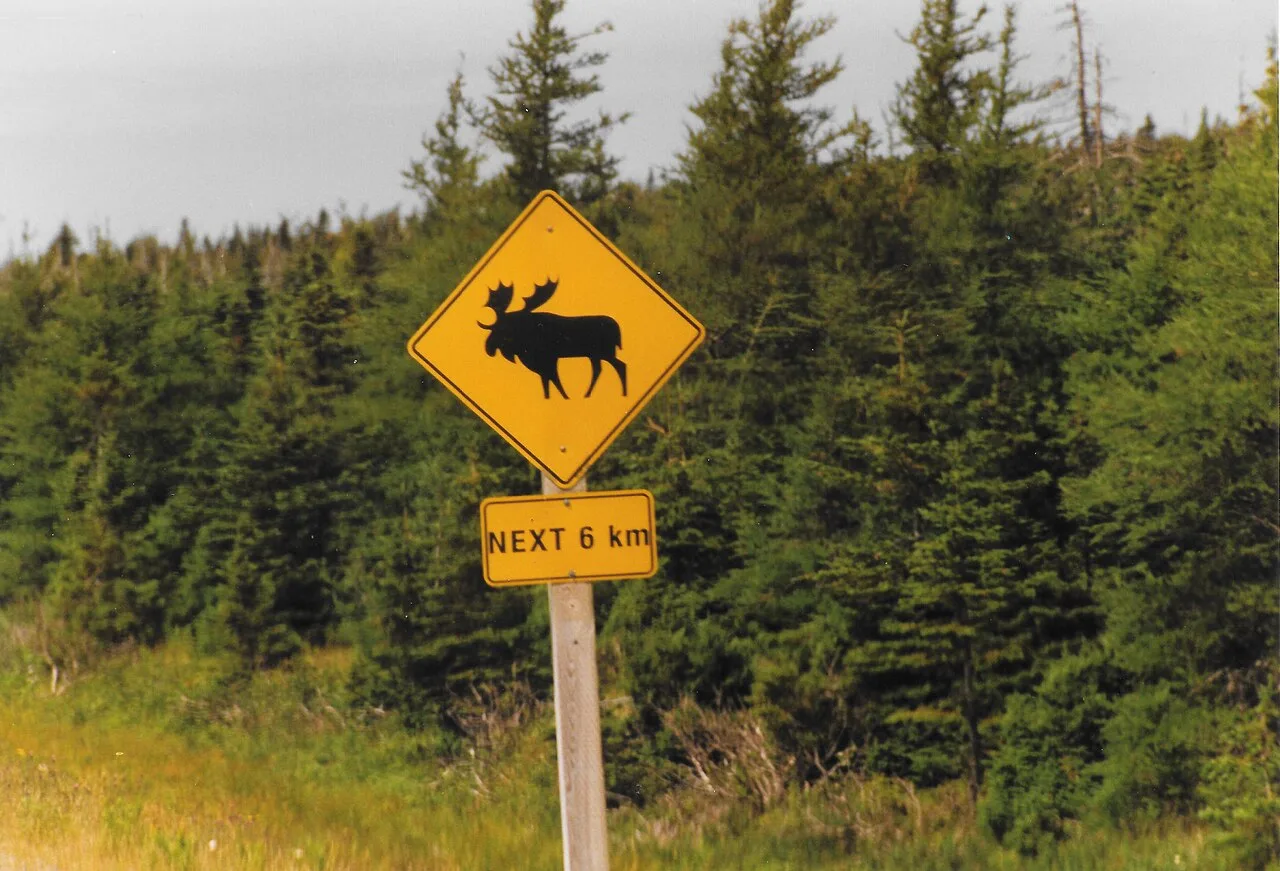
Watch for wildlife. The handbook warns that moose, deer and even cattle can step onto the road, especially where you see animal crossing signs, and suggests using high beams at night when you can.
Winter tires aren’t required by law in Nova Scotia, but the province’s winter driving tips tell drivers to use proper winter tires in good condition and to call 511 for highway conditions. The handbook says studded tires are legal only from October 15 to April 30. Enterprise’s Halifax branch offers winter tires in certain months, based on availability, so ask for them when you book a winter rental.
If you drive in from New Brunswick on Highway 104, you’ll reach the Cobequid Pass toll near Truro. Since December 2021, Nova Scotia-registered vehicles use it for free, while vehicles registered elsewhere still pay. Its FAQ says passenger tolls haven’t increased since 2004 and that lanes accept tap with Visa, Mastercard and Amex, as well as cash. We couldn’t load the current rate table on the operator’s site, so check it before you go. Most cars rented in Nova Scotia will have Nova Scotia plates, but ask the branch, as a rental registered elsewhere would pay the toll.
Driving distances from Halifax
We calculated these distances and times ourselves using the OSRM open-source routing engine on OpenStreetMap road data, from downtown Halifax to each place, on Oct 30, 2026. They’re for planning only: the times assume no stops, traffic or bad weather, and the route may differ from your GPS. Times are rounded to the nearest 15 minutes.
| From Halifax to | Distance | Drive time (no stops) |
|---|---|---|
| Halifax Stanfield Airport | 33 km | About 35 min |
| Peggy’s Cove | 45 km | About 45 min |
| Wolfville | 90 km | About 1 h 15 min |
| Lunenburg | 98 km | About 1 h 15 min |
| Confederation Bridge (Cape Jourimain, NB) | 256 km | About 3 h 15 min |
| Yarmouth | 302 km | About 3 h 45 min |
| Baddeck (start of the Cabot Trail) | 350 km | About 4 h 30 min |
| Sydney | 401 km | About 5 h 15 min |
FAQ
Can you rent a car in Nova Scotia at 21?
Yes, at the major brands. Enterprise says the minimum age to rent in Nova Scotia is 21, and its Halifax branches add an underage surcharge of $20 a day for drivers aged 21 to 24. Avis's Canadian terms also rent to drivers aged 21 to 24, with a $25 CAD a day underage surcharge and limits on some vehicle classes. Fees were checked on Oct 30, 2026 and can change.
What is the minimum age to rent a car in Nova Scotia?
21 at Enterprise and Avis, based on their own policy pages checked Oct 30, 2026. Drivers under 25 pay a daily young renter fee and can't book some larger or luxury vehicles.
Can I rent a car in Nova Scotia with a debit card?
Sometimes. Enterprise's downtown Halifax branch accepts debit cards if you meet address and paperwork rules, but its Halifax airport branch does not accept Canadian debit cards. Avis does not accept debit cards as credit identification at the time of rental. See our guide to renting a car without a credit card for more options.
Is driving in Nova Scotia easy?
For most Canadian drivers, yes. Traffic is light outside Halifax, the 100-series highways are the fast routes, and the rules match the rest of Canada, including right turns on red unless a sign says otherwise. Watch for moose and deer, fog on the coast, and winter storms.
Can I take a Nova Scotia rental car to PEI?
Generally yes. Enterprise's Halifax branch says cars rented in Canada can be driven throughout Canada and the US. Avis notes that for rentals from the Atlantic provinces, unlimited kilometres apply only within NS, NB, PEI and Newfoundland, so check the kilometre terms for your booking. The Confederation Bridge toll is $20.00 for a car, paid when you leave PEI.
Do I need winter tires in Nova Scotia?
They are not required by law, but the province strongly recommends proper winter tires for winter driving. Studded tires are legal only from October 15 to April 30. Rental companies offer winter tires in some months and based on availability, so ask the branch when you book.
Is it cheaper to rent at the airport or downtown?
It depends on the dates, so compare both for your trip. Airport locations can add fees that city branches don't, but downtown branches have shorter hours: Enterprise's Scotia Square branch, for example, closes at 5 PM on weekdays and 2 PM on weekends. Our Halifax airport car rental guide covers the airport desks in detail.
Ready to go? Compare rental cars for your Nova Scotia trip, then pick a route from our road trip guides.
Nova Scotia road trip essentials
Tools we’d use ourselves. Always check current prices and terms before you book.
- Rental carCompare companies across Nova Scotia. Compare rental cars →
- Flights from HalifaxSearch fares from YHZ. Search flights →
- Airport pickupDesks, shuttles and tips. Halifax airport car rental →
Related guides



The Moonlight Letter
Get Halifax & Atlantic Canada travel deals
Cheap-flight finds from YHZ, road-trip ideas and new guides, straight to your inbox.
We'll only use your email to send Moonlight Travel deals and guides. Unsubscribe anytime. See our Privacy Policy.